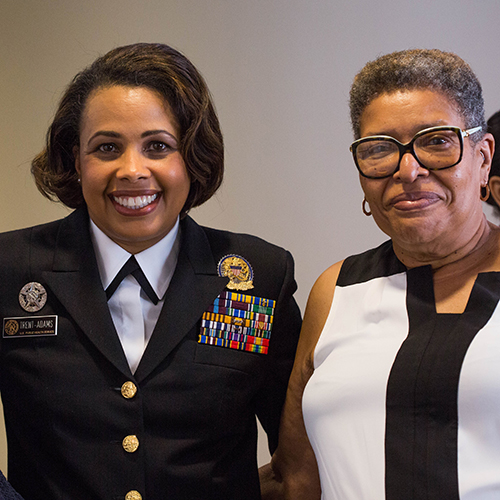
Zaharaa Davood

Zaharaa Davood

Jan 09, 2019

Leadership

nurse practitioner The Pennsylvania Action Coalition (PA-AC) encourages the growth of nurse leaders by providing networking opportunities and education opportunities. The PA-AC also serves as the state liaison to the Nurses on Boards Coalition

Strong leadership is a critical component of a transformed healthcare system. The nursing profession must produce leaders, who can serve as partners with other health professionals and be accountable for their own contributions to delivering high-quality care.

Nurses need to serve in leadership positions, including on governing boards. Appointing nurses to serve on their boards can help guide management and make improvements. Nurse leaders can provide a valuable perspective that balances the business of healthcare with clinical and patient outcomes. More nurses need to manage health systems and lead health care transformation. They need to position themselves as valued partners in health care improvement.

Nurses on health-related boards can translate their knowledge of bedside care, humanitarian approaches to care and quality & risk management to practice. Collaboration ensures that healthcare is safely delivered to patients and their families, and improves healthcare quality.

Click here to learn more about Pennsylvania Action Coalition's Leadership structure.

Key Initiatives

  • Provide networking opportunities: Increase participation in PA-AC Councils to foster collaboration and increase leadership capacity
  • Provide education opportunities: 
    • The CNO Subcommitee of the PA-AC Advisory Board partnered with the Pennsylvania Organization of Nurse Leaders (PONL) to create a Future of Nursing webinar series. The series consisted of three parts that addressed leadership, education, and patient safety. Click here to view the series.
    • The Southwest Regional Team of the PA-AC also created an opportunity for 17 nurses in the Pittsburgh area to participate in the Bayer Center's BoardsWork! Training and board placement program 

Nurses on Boards Coalition

The Pennsylvania Action Coalition serves as the state liaison to the Nurses on Boards Coalition (NOBC) – the campaign to ensure that at least 10,000 nurses are on boards by 2020. As of now 6,458 nurses serve on boards nationwide! The NOBC’s goal is to improve the health of communities across the country through the service of nurses on boards and other bodies. Be counted with the Nurses on Boards Coalition

Click here to view NOBC's 2018 highlights


 Click here to learn about all our initiatives 

nurse practitioner A key goal of the Pennsylvania Action Coalition is to advance the educational preparation of the nursing workforce. Nursing education should encourage continued lifelong learning and include opportunities for seamless transitions to higher-degree programs. Increased educational opportunities allow nurses to further develop their skills in providing high-quality care, effectively communicate goals, and contribute to research and programming to advance healthcare safety. 

Key Initiatives

  • Expand the BSN-prepared workforce: The Pennsylvania Action Coalition supports this effort through the work of the Pennsylvania Academic Progression in Nursing (PAPiN), a workgroup committed to promoting nursing education to advance academic progression and increase the supply of BSN-prepared nurses. 
  • Increase the number of doctorally prepared nurses: The Pennsylvania Action Coalition support nurses pursuing higher levels of education and training through an improved education system. Data from Jacqueline Dunbar-Jacob, PhD, RN, FAAN from the University of Pittsburgh School of Nursing shows the proportion of DNP (Doctor of Nursing Practice) and PhD (Doctor of Philosophy Nursing) graduates who transition into academic careers.   

Proportion of Graduates Who Transition into Academic Careers (Faculty Positions) 

Year DNP PhD
2014 - 15 20 / 237 (8%) 20 / 41 (49%)
2015 - 16 13 / 184 (7%) 16 / 27 (59%)
2016 - 17 22 / 236 (9%) 30 / 45 (66%)
2017 - 18 21 / 235 (9%) 23 / 41 (56%)
Total 76 / 892 (8.5%) 89 / 154 (58%)
*3 (<1%) DNP graduates and 6 (3%) PhD graduates entered post-doctoral positions between 2015 and 2018 

Report by Jacqueline Dunbar-Jacob, PhD, RN, FAAN

Distinguished Service Professor and Dean, University of Pittsburgh School of Nursing

Data Champion, PA Action Coalition

Pennsylvania Academic Progression in Nursing (PAPiN)

This workgroup is committed to promoting nursing education and closing the gap between the Commonwealth's nursing needs and the supply of BSN-prepared nurses. With representatives from all entry-level nursing programs (PA Higher Education Nursing Schools, PA Consortium of Associate Degree Nursing Program, Council of Health Professions Education, PA Association of Practical Nursing Administrators) and the practice arena, the workgroup advances seamless academic progression to increase the proportion of BSN-prepared nurses in Pennsylvania. 

If you have any questions regarding PAPiN, please contact Amy Ricords at 

Click here to read the Academic Progression in Nursing Whitepaper

Click here to view PAPiN's Executive Summary! 

View "The Value of the BSN" brochure to learn about the importance of transforming nursing education!

View "Academic Progression in Nursing: A Pathway to the BSN Vision" brochure 

 Click here to learn about all our initiatives 

At the Pennsylvania Nursing Workforce Coalition (PA-NWC), we believe diversity is essential to reducing healthcare disparities and fostering a more inclusive workforce. The Nurse Diversity Council (NDC) is dedicated to advancing diversity and cultural humility in nursing to ensure all Pennsylvanians have access to high-quality, patient-centered care.

NDC Vision & Mission

  • NDC Vision: At the Pennsylvania Nursing Workforce Coalition (PA-NWC), we believe diversity is essential to reducing healthcare disparities and fostering a more inclusive workforce. The Nurse Diversity Council (NDC) is dedicated to advancing diversity and cultural humility in nursing to ensure all Pennsylvanians have access to high-quality, patient-centered care.
  • NDC Mission: The Nursing Diversity Council (NDC) empowers nurses with the knowledge, skills, and attitudes to deliver culturally humble care and foster inclusion throughout the healthcare system. We serve as a hub for thought leadership and open dialogue, creating a safe space to explore and address diversity-related issues in nursing. We are committed to developing a nursing workforce that accurately represents the diversity and multifaceted aspects of the communities we serve, thereby enhancing healthcare outcomes for all.

Key Initiatives

The Nurse Diversity Council focuses on:

  • Increasing Diversity in Nursing: Working to close the healthcare disparity gap by promoting diversity across the nursing workforce.
  • Culturally Humble Care: Encouraging nurses to adopt culturally humble practices in their daily work.
  • Inclusive Workforce Development: Supporting programs and initiatives that prepare nurses to care for Pennsylvania’s increasingly diverse population.

Goals and Activities

  • Goal 1: Centralize and Share Diversity-Focused Workforce Development Resources
    • Curate a centralized hub to collect and organize events and survey feedback on activities, partners, and organizations for future engagement.
    • Compile and share contact information for workforce development programs to facilitate collaboration and idea-sharing.
    • Highlight successful programs that provide tools for career development conversations.
  • Goal 2: Strengthen Nursing Leadership Through an Equity-Focused Framework
    • Introduce and promote a leadership model aligned with the ANA framework to support culturally humble and equitable nursing leadership.
    • Engage nursing leaders and stakeholders to integrate diversity-centered leadership principles into workforce development initiatives.
  • Goal 3: Expand and Strengthen the Nurse Diversity Council and Mentorship Programs
    • Grow partnerships within the Nurse Diversity Council to expand mentorship programs across Pennsylvania,
    • Encourage collaboration between participating organizations to improve mentorship opportunities and avoid siloed efforts.
    • Increase accountability measures by setting clear expectations for engagement and tracking mentorship program outcomes.

Embracing Gracious Space

The Nurse Diversity Council is built on the philosophy of Gracious Space—a spirit of openness and respect. We believe in “inviting the stranger” by welcoming new perspectives and embracing “learning in public,” which means listening with an open mind and being willing to adjust our viewpoints. This framework helps us create an environment where meaningful, inclusive conversations about diversity can thrive.

Join the Nurse Diversity Council

We invite healthcare professionals and nursing students from all backgrounds across Pennsylvania to join the NDC. As a member, you’ll have the opportunity to collaborate with diverse leaders and professionals in the nursing and healthcare fields. Our members meet once a month via virtual conference to share updates, discuss progress, and drive forward action plans to promote diversity and inclusion in nursing.

Why Join?

  • Collaborate with like-minded professionals passionate about diversity.
  • Contribute to a more inclusive and culturally competent nursing workforce.
  • Share and gain insights from colleagues across Pennsylvania.

To join, please contact PA-NWC Assistant Director, Zaharaa Davood at .

Membership Details

As members of the Nurse Diversity Council, we embrace the spirit of inviting diverse perspectives and learning from each other, fostering an environment of creativity, growth, and mutual respect.

Open to anyone in Pennsylvania who is committed to fostering diversity in healthcare.

Meetings are held virtually once a month, lasting one hour.

Interested in Sharing Your Work? 

We’re always seeking members and guest presenters to highlight meaningful initiatives that promote diversity, equity, and inclusion in healthcare. Presenting at an NDC meeting is a great way to showcase your organization’s impact, share best practices, and connect with like-minded peers. We’d love to hear from you!

Presentation Details:

  • Timeframe: 15–20 minutes
  • Introduction: Share your organization’s name, mission, and vision, along with your role and connection to the organization.
  • Organizational Overview: Provide a brief snapshot of your key programs and the populations you serve, highlighting recent achievements or impact metrics.
  • Spotlight Programs/Projects: Showcase specific initiatives aligned with NDC’s mission, including success stories or notable outcomes.
  • Upcoming Opportunities: Share events, workshops, or ways for members to get involved.
  • We encourage you to leave time for questions and discussions on potential collaborations. Feel free to include visuals or share materials in advance for distribution.

If you’re interested in presenting or learning more, please contact PA-NWC Assistant Director, Zaharaa Davood at .

 Learn About the Strategic Plan in Action 

Campaign for Action logoThe Campaign for Action is a national campaign to transform health and healthcare through nursing. The Campaign for Action envisions a healthcare system where nurses contribute to the full extent of their capabilities. The goals for the Campaign for Action are based on recommendations from the Institute of Medicine’s (now the National Academy of Medicine) Future of Nursing report.

The campaign is backed by the AARP Foundation, AARP, and the Robert Wood Johnson Foundation. Each state has an action coalition to mobilize nurses, health providers, consumers, educators, and businesses to strengthen nursing on multiple fronts.

The Future of Nursing 2010 - 2020 Report

The Future of Nursing: Leading Change, Advancing Health report was published by the Institute of Medicine in October 2010. The report was the culmination of two years of research on how to transform the nursing profession. It identifies the nursing professional as a central component to improving the healthcare system, and provides evidence-based recommendations on training, education, professional leadership, and workforce policy. These recommendations aim to create a patient-centered healthcare system that relies on research and the transformative power of nursing to improve health across the country.

Key Recommendations

  • Nurses should practice to the full extent of their education and training.
  • Nurses should achieve higher levels of education and training through an improved education system that promotes seamless academic progression.
  • Nurses should be full partners, with physicians and other health professionals, in redesigning health care in the United States.
  • Effective workforce planning and policymaking require better data collection and information infrastructure.
 

The Future of Nursing 2020 - 2030 Report

The National Academy of Medicine on May 11 released its much-anticipated report, The Future of Nursing 2020-2030: Charting a Path to Achieve Health Equity. Like its predecessor from 2010, this report will influence the direction of nursing and health care for years to come.

The report hones in on the problem of health disparities, rooted in centuries of injustice that will take substantive societal change to solve. Achieving health equity will require serious reflection on our identities and responsibilities as nurses, nurse champions and contributing members of society. Then we will need the willpower to turn that reflection into action.

Read the full report here: The Future of Nursing 2020-2030: Charting a Path to Achieve Health Equity
Key Recommendations

  • Creating a shared agenda: All national nursing organizations should initiate work to develop a shared agenda for addressing social determinants of health and achieving health equity. 
  • Supporting nurses to advance health equity: By 2023, state and federal government agencies, health care and public health organizations, payers, and foundations should initiate substantive actions to enable the nursing workforce to address social determinants of health and health equity more comprehensively, regardless of practice setting
  • Promoting nurses' health and well-being: Nursing education programs, employers, nursing leaders, licensing boards, and nursing organizations should initiate the implementation of structures, systems, and evidence-based interventions to promote nurses’ health and well-being, especially as they take on new roles to advance health equity.
  • Capitalizing on nurses' potential: All organizations, including state and federal entities and employing organizations, should enable nurses to practice to the full extent of their education and training by removing barriers that prevent them from more fully addressing social needs and social determinants of health and by improving health care access, quality, and value. These barriers include regulatory and public and private payment limitations; restrictive policies and practices; and other legal, professional, and commercial impediments.
  • Paying for nursing care: Federal, tribal, state, local, and private payers and public health agencies should establish sustainable and flexible payment mechanisms to support nurses in both health care and public health, including school nurses, in addressing social needs, social determinants of health, and health equity.
  • Using technology to integrate data on social determinants of health into nursing practice: All public and private health care systems should incorporate nursing expertise in designing, generating, analyzing, and applying data to support initiatives focused on social determinants of health and health equity using diverse digital platforms, artificial intelligence, and other innovative technologies.
  • Strengthening nursing education: Nursing education programs, including continuing education, and accreditors and the National Council of State Boards of Nursing should ensure that nurses are prepared to address social determinants of health and achieve health equity.
  • Preparing nurses to respond to disasters and public health emergencies: To enable nurses to address inequities within communities, federal agencies and other key stakeholders within and outside the nursing profession should strengthen and protect the nursing workforce during the response to such public health emergencies as the COVID-19 pandemic and natural disasters, including those related to climate change.
  • Building the evidence base: The National Institutes of Health, the Centers for Medicare & Medicaid Services, the Centers for Disease Control and Prevention, the Health Resources and Services Administration, the Agency for Healthcare Research and Quality, the Administration for Children and Families, the Administration for Community Living, and private associations and foundations should convene representatives from nursing, public health, and health care to develop and support a research agenda and evidence base describing the impact of nursing interventions, including multisector collaboration, on social determinants of health, environmental health, health equity, and nurses’ health and well-being.
 

 Click here to GET INVOLVED